Ok

En poursuivant votre navigation sur ce site, vous acceptez l'utilisation de cookies. Ces derniers assurent le bon fonctionnement de nos services. En savoir plus.

  • Intelligence animale

    http://www.nationalgeographic.com/ngkids/0407/images/stories_smart_title.gif

     
    ANIMALS ARE SMARTER THAN WE THOUGHT

    Recent research shows some species make tools, or exhibit planning and logic.

    By Robert C. Cowen

    Many animals exhibit smart behaviors. But do any of them show what humans would call "intelligence?" Some recently reported lines of research cautiously suggest that the answer is "yes."

    Chimpanzees have surprised a research team by making wooden spears for hunting. It's the first known example of weaponmaking by a nonhuman.

    Western scrub jays have shown future planning – rather than instinctive actions – in their food-caching behavior. Ravens have demonstrated logical thinking in solving a food-retrieval puzzle.

    Such revelations are beginning to enable scientists to make the crucial distinction between genetically hard-wired behavior or trial-and-error learning and "intelligent" thinking.

    Jill Pruetz of Iowa State University in Ames and Paco Bertolani at England's University of Cambridge reported the chimpanzee's surprising behavior earlier this month in the journal Current Biology. They observed it in southeastern Senegal.

    Chimps have often been seen to use sticks to retrieve insects such as termites for food. This time, a chimp carefully sharpened a stick to make a spear. It then thrust the spear into a hole in a tree to skewer a bush baby – a small primate that chimps regularly eat. The researchers saw 22 instances of such spear hunting. Scientists know that chimps make tools, including stone tools. Now they are seen to be making weapons. The more closely chimps are studied, the more humanlike traits they display.

    So, too, do some birds.

    Reporting their work in Nature last month, Nicola Clayton and colleagues, also at Cambridge University, showed how western scrub jays plan for the future.

    The food caches of these North American birds aren't random. Specific types of food are stored at specific locations to meet specific foreseeable needs. The scientists say their findings "suggest that the jays can spontaneously plan for tomorrow ... thereby challenging the idea that this is a uniquely human ability."

    Bernd Heinrich at the University of Vermont in Burlington and Thomas Bugnyar at St. Andrews University in Scotland go further. They explain in the April issue of Scientific American why they think their studies "have finally offered some hard proof that ravens are indeed intelligent, in that they are able to use logic to solve problems."

    The researchers set different ravens the task of retrieving food suspended at the end of a string that was tied to the bird's perch.

    But instead of dashing about trying to grab the food in midair, a raven would sit and study the situation for a few minutes. Then it would quickly go through the logically correct sequence to retrieve the food efficiently. The steps involve pulling up a loop of string and putting a foot on it to hold it, then pulling up more string, and so forth. Soon the bird had pulled up the entire string and obtained the food.

    In other tests, ravens showed that they could distinguish between individuals – both ravens and humans.

    A raven could then assess whether or not another individual was likely to have observed where that raven had stored food. The raven then knew which other individuals knew enough about its food caches to be potential thieves.

    Humans make such assessments all the time. Drs. Heinrich and Bugnyar note that "in this way, too, they [the ravens] are much like humans."
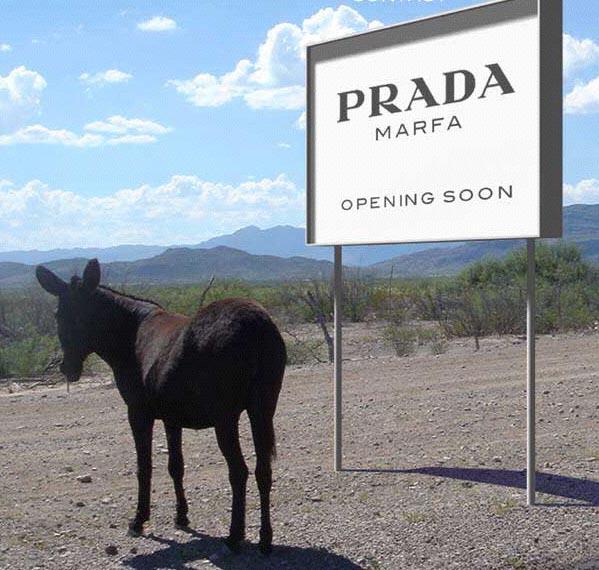

    http://www.csmonitor.com/2007/0329/p17s01-stss.html

  • Le Diable ne s'habille plus en Prada


    PRADA DIT NON À LA FOURRURE

    La célèbre marque de luxe Prada devient la première maison italienne à signer la campagne de la PETA contre l'emploi de la fourrure dans la mode.

    Pour Miuccia Prada, la fourrure n'a simplement plus sa place et n'est plus tendance.

    La société italienne, l'un des chefs de file de la mode mondiale, espère ainsi qu'elle pourra influencer les autres grands designers à se passer des fourrures.

    Prada, qui célébrera ses 20 ans l'an prochain, effectue ainsi un virage à 180 degrés. Lors de la présentation de la collection automne 2007 l'an dernier, la marque avait grand usage de peaux d'animaux.

    La PETA (People for the Ethical Treatment of Animals) est une association de défense des droits des animaux militant contre l'expérimentation animale et son commerce.

  • Corrida

     
    « La corrida, c'est le refuge mélancolique de l'impuissance et le nomadisme de l'impunité qui cherchent à détruire la part humaine dans l'homme. Dans une ironie solennelle, de l'odeur du sang à l'impudeur, le toréador ne respire que la mort de l'innocence gisant à ses pieds. Où sont donc dans cette barbarie la compassion et l'intelligence du coeur qui assument le respect de la vie et la traversée vers l'Autre ? »

                                                                                                  Morad EL HATTAB,

                                                            Lauréat du Prix Littéraire Lucien Caroubi, Prix pour la Paix et la Tolérance

  • Wolfgang Puck bannit le foie gras de sa carte

    L'image “http://perseides.hautetfort.com/images/medium_Wolfgang_Puck.jpg” ne peut être affichée car elle contient des erreurs.

     
    LOS ANGELES
    - Le chef autrichien basé à Los Angeles Wolfgang Puck, qui
    régale chaque année les stars de cinéma avec le menu des Oscars, a annoncé avoir décidé de bannir de ses cuisines le foie gras. Motif: la fabrication de ce mets fait souffrir les animaux.

    Nourrir les canards de force fait grossir leur foie jusqu'à dix fois leurtaille normale", a relevé M. Puck dans un communiqué. Sa décision s'inscrit dans le cadre de l'adoption par le cuisinier d'une charte contre la maltraitance des animaux et en faveur des produits biologiques.

    M. Puck devance ainsi les directives du gouverneur de Californie ArnoldSchwarzenegger, qui a signé une loi interdisant le gavage des oies et canards d'ici à 2012 dans son Etat. Depuis septembre, Chicago (Illinois, nord) interdit à ses restaurateurs d'offrir du foie gras dans leurs menus, en vertu d'une décision de la municipalité estimant que le gavage est une
    méthode cruelle.

    Des sociétés de défense des animaux ont en outre lancé une plainte fin 2006contre le département de l'Agriculture de New York pour obtenir l'interdiction de la vente et de la production de foie gras dans cet Etat, considéré comme le principal producteur de ce produit aux Etats-Unis.

    Wolfgang Puck, 57 ans, qui a émigré aux Etats-Unis à l'âge de 24 ans, est àla tête d'une prospère entreprise gérant près de 100 restaurants, dont 14 de luxe, parmi lesquels les "Spago", lieux fréquentés par les grands noms de Hollywood.

    http://www.romandie.com/infos/ats/display.asp?page=20070323034614399172194810300.xml